Single vs Dual Tank Water Softener: Is Twin Worth It? (November 2026)
A dual tank water softener can keep supplying soft water while one tank regenerates. Choose a single tank if its capacity fits your home and a short pause in softening is acceptable.
On this page (10 sections)
- How does a dual tank water softener differ from a single tank?
- When is a single tank water softener the better fit?
- Who should choose a twin tank water softener?
- How should you compare grain capacity?
- What should you check before setting up a dual tank water softener?
- How do regeneration controls affect salt and water use?
- What mistakes should you avoid when choosing a dual tank system?
- Which water softener should you choose?
- How we compare single and dual tank water softeners
- Is a dual tank water softener worth it for your home?
A dual tank water softener can keep supplying soft water while one tank regenerates. Choose a single tank if its capacity fits your home and a short pause in softening is acceptable.
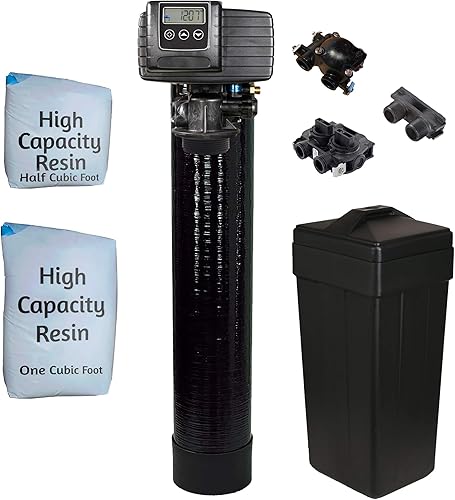
The single-tank AFWFilters Fleck 5600SXT has a 48,000-grain capacity. The two Fleck 9100SXT options have twin tanks, but their capacity figures describe different setups.
 Best for nonstop household demand
Fleck 9100SXT 48K Twin Tank Softener
How does a dual tank water softener differ from a single tank?
A dual tank water softener can soften water through one tank while the other regenerates; a single tank has no second tank to take over. The difference matters when you need softened water at any hour.
A softener uses resin to exchange hardness minerals in water. Regeneration restores the resin's ability to soften water, and a single-tank system pauses softening through that tank during the process.
A twin-tank system can switch to its other tank, so one can remain in service while the other regenerates. The Fleck 9100SXT systems are designed for soft water availability during regeneration.
Continuous availability does not mean unlimited capacity. The system still needs to match your water hardness and household use.
When is a single tank water softener the better fit?
A single tank is a strong fit when its capacity matches your home and you can schedule regeneration for a low-use period. It also makes sense when your installation area cannot comfortably fit two mineral tanks.
The AFWFilters Fleck 5600SXT has one mineral tank, a metered design and a digital Fleck 5600SXT control head. Its metered control measures water use and regenerates as needed.
A single tank generally needs less equipment space than a twin-tank system. Still, measure for the mineral tank, brine tank, plumbing and room to reach the controls for service.
If your household can avoid water use during an occasional regeneration period, a second tank may add space and equipment without solving a problem you have. Set the regeneration schedule according to the system instructions and your household's routine.
Skip this style if you regularly need softened water at all hours, or if regeneration could overlap with essential household use. In that case, compare a twin-tank system while still checking capacity and installation fit.
Who should choose a twin tank water softener?
Choose a twin tank water softener when you want softened water to remain available while one tank regenerates. This suits households with steady demand or routines that make it hard to avoid water use overnight or during the day.
The Fleck 9100SXT 48K system has two 10 x 54 in mineral tanks and metered on-demand control. Its design allows one tank to continue supplying soft water as the other regenerates.
The AFWFilters Fleck 9100SXT option has two tanks, each rated at 32,000 grains, with 64,000 grains total. It includes two 9 x 48 in resin tanks, a brine tank with safety float and a 1 in bypass connection.
Compare capacity labels carefully. A 48,000-grain system and a system rated 32,000 grains per tank and 64,000 grains total are different configurations, so use the capacity that applies to your demand calculation.
A twin-tank system is a poor fit when the second tank will not solve a meaningful interruption for your household, or when you lack a suitable installation area. More equipment and connections also mean more to measure and fit before setup.
How should you compare grain capacity?
Choose capacity from measured hardness and household use, not from tank count alone. Tank layout affects soft water availability during regeneration, while grain capacity describes how much hardness the system is rated to handle.
The Fleck 5600SXT single-tank model is rated at 48,000 grains. The AFWFilters twin-tank model is described as 32,000 grains per tank and 64,000 grains total.
A higher total figure is not automatically the better match. Estimate your demand before you buy, then compare the capacity and controls against your water conditions.
Our guide on how many grains of water softener you need explains how hardness and household use shape capacity. You can test your water hardness at home to get a useful starting figure.
What should you check before setting up a dual tank water softener?
Measure the installation area and the route to it before choosing a dual tank water softener. Make room for both mineral tanks, the brine tank, plumbing connections and access for future care.
The Fleck 9100SXT 48K system includes two 10 x 54 in mineral tanks and a 14 x 36 in brine tank. The AFWFilters 32K-per-tank system includes two 9 x 48 in resin tanks and a standard brine tank.
The single-tank Fleck 5600SXT measures 14 x 14 x 62 in and includes a brine tank, bypass and 1 in adapters. Component dimensions do not describe the full working space needed around a system.
Before installation, confirm that the location has the required plumbing and a suitable drain route, then follow the system's instructions for connections and clearances. Check that the tanks can pass through doors and turns on the way to their final location.
The water softener installation cost guide can help you plan the work. For placement considerations, see where to install a water softener.
How do regeneration controls affect salt and water use?
Compare the controls and settings for each model instead of assuming a twin-tank design uses more or less salt. Regeneration frequency depends on water conditions, household demand and the system settings.
The Fleck 5600SXT has a metered design that measures water use and regenerates as needed. The Fleck 9100SXT 48K is also described as a metered on-demand system; its stated savings in water and salt are a product claim, not a guaranteed result for every home.
The AFWFilters twin-tank system also has a metered control valve. Set it according to the system instructions and your water conditions, and keep the brine tank supplied as directed.
Routine care helps you notice changes before they affect your water. Use the water softener maintenance checklist and learn what the brine tank does and which issues to watch for.
What mistakes should you avoid when choosing a dual tank system?
The most common mistake is paying for continuous availability before confirming capacity, space and household need. A twin-tank design solves a specific regeneration gap, so make sure that gap matters in your routine.
Do not treat total capacity as a substitute for sizing. Measure hardness, estimate daily use and use the grain sizing guide before deciding between a 48,000-grain system and a configuration rated 64,000 grains total.
Do not plan around tank dimensions alone. Include the brine tank, service access, plumbing, drain routing and the path into the room when measuring.
Do not assume that “metered” means you can ignore settings or care. Read the installation instructions, set regeneration to suit your conditions and follow the guidance for the brine tank.
Which water softener should you choose?
Choose the single-tank AFWFilters Fleck 5600SXT if 48,000 grains fits your needs and a regeneration pause is acceptable. Choose the Fleck 9100SXT 48K if availability during regeneration matters and its two-tank footprint fits.
Consider the AFWFilters twin-tank option if your capacity estimate supports 32,000 grains per tank and 64,000 grains total. Its per-tank and total figures make it especially important to compare the capacity you need with the capacity stated for each tank.
For a broader view of system types and sizing, read how to choose a water softener system for home use. If you are weighing softening against filtration, compare what a water softener and water filter each do.
How we compare single and dual tank water softeners
We compare tank layout, stated capacity and controls against the needs of a home choosing between single and twin tanks. The main question is whether uninterrupted soft water during regeneration is useful enough to justify the extra equipment and space.
Product descriptions identify the system features and availability claims. The best fit still depends on measured hardness, household demand, installation space and the system instructions.
Is a dual tank water softener worth it for your home?
A dual tank water softener is worth considering when your household needs soft water available while a tank regenerates. Pick a single tank when its capacity fits and you can plan around regeneration; pick a twin tank when continuous availability matters and you have room for both tanks.
Check hardness and demand before comparing capacity, then measure the installation route and service area. Use the grain sizing guide to make the final capacity choice.
Frequently asked questions
What is the main difference between single and dual tank water softeners?
A single-tank softener has one resin tank, so that tank cannot soften water while it regenerates. A dual-tank system can switch to its other tank during regeneration, helping maintain soft water availability.
The tradeoff is a system with two mineral tanks to fit and connect.
Does a dual tank water softener provide soft water 24/7?
A twin-tank design can provide soft water while one tank regenerates because the other tank remains available. You still need to choose suitable capacity and install the system correctly.
Check the system's capacity, plumbing requirements and instructions against your home's water use.
Is a single tank water softener enough for a family?
It can be, depending on your water hardness, household use and system capacity. A single tank may suit a home that can tolerate regeneration periods or schedule regeneration for lower-use times.
Estimate your grain capacity needs before choosing a tank layout.
Does a dual tank softener use more salt?
Tank count alone doesn't tell you how much salt a system will use. Salt use depends on water hardness, demand, capacity settings and regeneration controls.
Compare the exact models' metered settings and follow their manuals; don't assume a twin-tank system always uses more or less.
How do I choose between single and twin tank capacity?
Start with your household's daily water use and measured hardness, then estimate the grains the softener must remove between regenerations. A twin-tank design affects soft water availability during regeneration, while capacity relates to how much hardness each tank can handle.
Use our grain sizing guide to estimate your needs.


