Water Softeners for Sale Online: What to Check First
Before buying a water softener for sale online, match its capacity and features to your measured water hardness, household demand and installation space. Then check included parts, upkeep and support.
On this page (11 sections)
- What should you check before buying a water softener online?
- How do you match a softener to your water?
- Which system type fits your home?
- What should you check about size and installation?
- What should you look for in warranty and support?
- Which water softeners for sale online should you compare?
- How do you compare online offers fairly?
- What setup steps should you plan before ordering?
- What care does a salt-based softener need?
- What common buying mistakes should you avoid?
- Which water softener should you choose?
A water softener for sale online should match your measured water hardness, household demand and installation space. Check those needs first, then compare system capacity, controls, included parts and support.
Begin with a water test and a quick inventory of your household’s water use. Those details help you narrow the options before comparing the features of individual systems.
If you’re still deciding on system type, our guide to choosing a water softener system for your home explains the main fit questions.
What should you check before buying a water softener online?
Check water conditions, capacity, fit, installation and support before comparing brand names. A system that matches your water and plumbing is a stronger choice than one selected only for a large grain number.
Use this checklist to compare options:
| Check | What to confirm |
|---|---|
| Water conditions | Hardness, and iron or sediment if you use well water |
| Capacity | Whether the grain capacity suits your hardness and water use |
| System type | Whether you want softened water throughout the home |
| Physical fit | Tank dimensions, access route and service space |
| Installation | Plumbing, drain, power and included parts |
| Ongoing care | Salt needs, regeneration controls and maintenance instructions |
| Support | Warranty terms and help from the manufacturer |
Gather the same details for every system so you can compare them on equal terms. Keep your water test results, measurements and installation questions together.
How do you match a softener to your water?
Match a softener to measured hardness and daily water use, not household size alone. A water test gives you a useful starting point and can help distinguish hard-water issues from other water concerns.
For a private well, test for iron and sediment as well as hardness. Those conditions can change what treatment equipment you need, and a softener’s ability to reduce iron depends on the particular system and water conditions.
A softener may not replace a filter. Our guide to water softener versus water filter explains how the two systems address different water concerns.
How many grains should a water softener have?
Choose grain capacity based on hardness and household demand together. A higher capacity can suit heavier demand, but it doesn’t replace checking the system’s sizing guidance and regeneration setup.
Compare capacity as one part of the decision. Use our guide to how many grains of water softener you need for a more detailed sizing approach.
Which system type fits your home?
Choose a whole-house softener if you want treated water at the home’s outlets. Before you buy, check that the installation area has room for the equipment, plumbing connections and routine access.
If your water comes from a well, look at the conditions the exact system is meant to address. Our well water softener guide covers what to consider when hardness, iron and sediment may all matter.
A softener and a descaler work differently. If you’re weighing those approaches, read our water softener versus descaler comparison.
What should you check about size and installation?
Measure the installation area, access route and service space before ordering. Compare the system’s dimensions with the space near your water line, and leave room to reach controls or refill salt when the design requires it.
Check what the system needs to operate. Depending on the model, setup may involve plumbing fittings, a drain connection, power or other parts; confirm which items are included and which you’ll need to arrange.
If you’re unsure about the connection, drain route or bypass arrangement, ask a qualified installer to review your plumbing. Our guide to where to install a water softener covers common placement considerations.
What should you look for in warranty and support?
Read the warranty length, coverage and activation requirements before you buy. Terms vary by brand and may cover the tank, electronics and other parts for different periods.
Check how to contact support and whether the manufacturer offers help with setup or maintenance. Keep the manual and warranty details after purchase so you can follow the care steps for your system.
For a closer look at how major names differ, read our water softener brands comparison.
Which water softeners for sale online should you compare?
Compare these four water softeners for sale against your water test and installation plan. Each has a different capacity, setup or household fit, so the right choice depends on the conditions in your home.
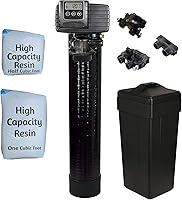
The AFWFilters Fleck 5600SXT suits buyers who want a metered system with a stated 48,000-grain capacity. Its included components are an instruction manual, inlet hose and outlet hose, and the design uses double backwash.
Choose it if its capacity and installation needs match your home and you want a digital metered control head. Skip it if you need a compact one-tank design or a system specifically described for a small bathroom count.
The Aquasure Harmony is aimed at homes with 1 to 2 bathrooms. It has a programmable digital metered control head, a resin tank and a brine tank.
Choose it if you want a whole-house softener sized for a smaller home and value a programmable control. Skip it if your household demand calls for a larger capacity or your water conditions need treatment beyond the system’s stated fit.
Kenmore describes the 420 for households of 1 to 5 people and says it reduces hardness and clear-water iron. It uses IntelliSoft regeneration and has a built-in sediment screen.
Choose it if the household range, iron capability and setup suit your water. Skip it if you need a one-tank system or need to address iron or sediment beyond the model’s stated capabilities.
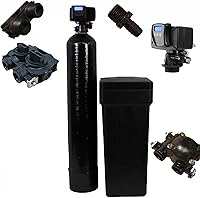
The iSpring WCS45KG has a one-tank design with a stated 45,000-grain capacity. It uses automatic backwash and media regeneration, and iSpring advises adding a suitable pre-filter when water has significant sediment.
Choose it if saving space and automatic regeneration fit your priorities. Skip it if you need a system with a built-in sediment filter or your water contains iron that needs separate treatment first.
How do you compare online offers fairly?
Compare the same details for every system: capacity, controls, dimensions, included parts, installation requirements and warranty. This helps you see which option fits your home instead of relying on general claims.
Use a short comparison sheet:
- Record measured hardness and any iron or sediment results.
- Note each system’s capacity and stated household fit.
- Compare tank dimensions with the planned installation area.
- Check whether fittings, bypass parts or a pre-filter are needed.
- Review warranty terms and support options.
- Confirm salt and maintenance needs in the manual.
If two systems seem close, focus on what will affect your setup and upkeep. A different tank arrangement, control system or installation requirement can matter more than a modest difference in capacity.
What setup steps should you plan before ordering?
Plan the location, plumbing, drain, power and first setup steps before a system arrives. The exact process varies by model, so follow that system’s manual and arrange professional installation if the plumbing work is outside your experience.
First, confirm the water line and installation location. Check that the floor and space can accommodate the equipment, that there is room for service, and that the route to the installation area will fit the system.
Next, confirm the connections and supplies. A water softener may need a bypass arrangement, a drain line and power, depending on its controls; verify the requirements for your model rather than assuming accessories are included.
After installation, follow the manual to set the hardness and regeneration controls. Use the water test results when entering settings, and confirm the system’s salt requirements before putting it into service.
What care does a salt-based softener need?
A salt-based softener needs routine checks of its salt supply, controls and brine tank. Follow the manual’s schedule and use the salt type and setup recommended for your system.
Check the salt level often enough to avoid running short, while avoiding overfilling the tank. If the system’s controls show an error or the water becomes hard again, consult the manual before changing settings.
Keep the area around the softener accessible so you can inspect it and reach its controls. Our water softener maintenance checklist covers the routine tasks that help you keep up with care.
What common buying mistakes should you avoid?
Avoid buying by grain capacity, household size or brand name alone. Each can help narrow your options, but none replaces checking your actual water and installation needs.
Common mistakes include:
- Guessing hardness instead of testing the water.
- Treating a household-size range as a precise capacity calculation.
- Assuming a softener also filters sediment or addresses every iron condition.
- Measuring only the tank space and forgetting access or the route into the room.
- Assuming plumbing parts, power connections or installation are included.
- Skipping the manual’s salt, setup and maintenance requirements.
A water softener addresses hardness through ion exchange. If taste, sediment or other water concerns matter, consider whether separate filtration is needed; our water softener and filter comparison explains the difference.
Which water softener should you choose?
Choose the AFWFilters Fleck 5600SXT if its 48,000-grain capacity, metered control and installation requirements fit your home. Choose the Aquasure Harmony for a smaller home with 1 to 2 bathrooms, or the Kenmore 420 if its stated fit for 1 to 5 people and clear-water iron reduction match your needs.
Pick the iSpring WCS45KG when its compact one-tank design is the priority and you can address sediment or iron separately when needed. Before buying any water softener for sale, confirm your water test, available space, installation plan and ongoing care needs.
For larger-capacity options, see our 64,000-grain water softener guide.
Frequently asked questions
What should I check before buying a water softener online?
Start with measured hardness, household water use and, for well water, iron and sediment. Then compare capacity, controls, tank dimensions, installation needs, included parts and warranty.
Check the manual for salt and maintenance needs.
Confirm the system fits your water, plumbing and available space before ordering.
How do I choose the right grain capacity?
Choose capacity using your measured hardness and household water use together. Household size can offer a rough starting point, but water use varies, so it should not be your only sizing measure.
Compare your results with the system’s sizing guidance.
Our guide to how many grains you need explains the calculation in more detail.
Can a water softener treat well water?
Some systems address certain well-water conditions, but you need to know the hardness, iron and sediment levels first. Check the exact model’s stated limits and whether the water needs a pre-filter or separate iron treatment.
A water test helps you choose equipment for the water coming into your home.
Do online water softener prices include installation?
Installation may be separate. Check whether the system includes the fittings and bypass parts your plumbing needs, and whether you must arrange a drain connection, power outlet or professional installer.
Measure the installation area and review the manual before ordering so you can plan the full setup.