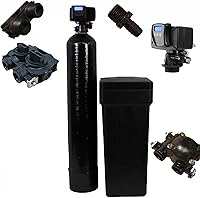
7 Best Water Softener and Filter Combos (November 2026)
The best water softener and filter combos include the Aquasure 64 for large households, the Kenmore Elite 520 Softener and Filter Hybrid for chlorine taste, and the Aquasure 32 for smaller households.
On this page (5 sections)
The Aquasure 64,000 Grain Softener and Filter Bundle is the best water softener and filter combo for larger homes, pairing whole-house softening with a 75 GPD reverse osmosis system for drinking water. This roundup also includes compact city-water options, carbon filtration, a salt-free scale treatment system and a multi-stage bundle designed for wells.
Softening and filtration solve different water problems. An ion-exchange softener reduces hardness minerals, while a filter stage targets specific substances such as sediment or chlorine taste and odor; reverse osmosis provides a separate drinking-water treatment point.
If you want to compare softeners without bundled filtration, start with our guide to whole-house water softener systems. For a closer look at the two jobs, read what a water softener does compared with a water filter.
Our picks at a glance
-
1
 Best for large households
Aquasure 64,000 Grain Softener and Filter Bundle
8.4/10 our score
See it on Amazon -
2
 Best for chlorine taste
Kenmore Elite 520 Softener and Filter Hybrid
8.0/10 our score
See it on Amazon -
3
 Best for smaller households
Aquasure 32,000 Grain Softener and Filter Bundle
8.0/10 our score
See it on Amazon
- 4
 Check it
EcoPure EPH130 Softener and Filter System
Best for an integrated cabinet - 5
 Check it
AFWFilters Fleck 5600SXT Softener with Upflow Carbon Filter
Best for higher flow demand - 6
 Check it
PRO+AQUA Elite 5-Stage Well Water Bundle
Best for private wells - 7
 Check it
Kind Water Systems E-3000 Salt-Free Softener and Filter
Best for salt-free scale control
How to choose a water softener and filter combo
Choose a combo by matching each treatment stage to a measured water issue, then confirm that its capacity and flow fit your household. A bigger package is not automatically a better fit if its filters target the wrong problem.
Start with a hardness test, and test well water for contaminants that matter to your source. A hardness result helps estimate softener capacity, while a broader water analysis can guide filtration choices; our water hardness testing guide explains how to get a useful reading.
Does a water softener and filter combo match your water?
An ion-exchange softener is the relevant stage when you want to reduce hardness minerals. Carbon media can target chlorine taste and odor, sediment filters catch particles, and reverse osmosis is commonly used for a separate drinking-water tap.
Do not assume that the word “filter” means every unwanted substance is addressed. Compare the system’s stated treatment claims with the test results and decide whether you need treatment throughout the house, at a drinking tap, or both.
For well water, a lab test should come before equipment selection. Iron, sediment, odor and other issues can call for different stages, so compare the exact results with the system’s stated limits and intended water source.
How should you size a combo system?
Size the softener by combining water hardness with daily household use, then check the manufacturer’s guidance as a second reference. Bathroom count and family size are useful starting points, but actual demand and hardness can change the needed capacity.
The Aquasure 64,000-grain bundle is aimed at 4 to 5 bathrooms and up to 6 family members, while its 32,000-grain counterpart is aimed at 1 to 2 bathrooms and up to 3 people. The Kenmore Elite 520 has a 31,000-grain capacity, and the AFWFilters softener is rated at 48,000 grains.
Flow matters too, especially if showers, laundry and dishwashing often run together. Compare the stated flow guidance with your home’s peak demand, and use our water softener sizing guide to estimate capacity needs.
Which filtration layout fits your goals?
A built-in hybrid can save space and simplify the overall layout, while separate tanks let you see that softening and filtration are distinct stages. A drinking-water RO system adds another installation point, usually at the sink, and has its own filter replacement schedule.
Pick carbon filtration when its stated targets match your concern, such as chlorine taste or odor. Pick an RO bundle when you want a separate drinking-water stage; choose a multi-stage well package only after checking its claims against a current test.
| Product | Best for | Hardness capacity | Drinking-water system | Bathroom guidance | Our score |
|---|---|---|---|---|---|
| Aquasure 64,000 Grain Softener and Filter Bundle | large households | 64,000 grains | 75 GPD reverse osmosis | 4 to 5 bathrooms | 8.4 |
| Kenmore Elite 520 Softener and Filter Hybrid | chlorine taste | 8.0 | |||
| Aquasure 32,000 Grain Softener and Filter Bundle | smaller households | 32,000 grains | 75 GPD reverse osmosis | 1 to 2 bathrooms | 8.0 |
| EcoPure EPH130 Softener and Filter System | an integrated cabinet | 7.3 | |||
| AFWFilters Fleck 5600SXT Softener with Upflow Carbon Filter | higher flow demand | 7.1 | |||
| PRO+AQUA Elite 5-Stage Well Water Bundle | private wells | 7.0 | |||
| Kind Water Systems E-3000 Salt-Free Softener and Filter | salt-free scale control | 6.9 |
The best water softener and filter combos
These seven systems cover different household sizes, water sources and treatment approaches. They are ordered by score, with the highest-scoring pick first.
Aquasure 64,000 grain combo: Best for large households
Aquasure 64,000 Grain Softener and Filter Bundle: Best for large households
- 64,000-grain hardness capacity
- Includes a 75 GPD reverse osmosis system
- Aquasure says it suits 4 to 5 bathrooms and up to 6 family members
A high-capacity softener is paired with a reverse osmosis system for drinking water. Aquasure says it suits homes with 4 to 5 bathrooms and up to 6 family members.
Pros
- Highest stated grain capacity in this roundup
- Includes reverse osmosis drinking-water system
- Aquasure offers up to 5 years of manufacturer warranty
Cons
- RO filters and membrane need scheduled replacement
- Aquasure's stated bathroom guidance should be checked against household demand
The Aquasure 64,000 Grain Softener and Filter Bundle is the strongest fit here for a larger household seeking whole-house softening and reverse osmosis drinking water. Aquasure says it suits homes with 4 to 5 bathrooms and up to 6 family members.
The softener is rated for 64,000 grains of hardness, and the separate RO system is rated at 75 GPD. The combination gives you one stage for household water and another for drinking water, rather than relying on one treatment method for every purpose.
Aquasure recommends replacing the RO sediment and carbon filters every 6 to 12 months, then replacing the membrane and post-carbon filters every 18 to 24 months, depending on use. The bundle also comes with up to 5 years of manufacturer warranty and lifetime technical support.
Choose it when the stated capacity and RO arrangement fit your home. Skip it if you want a single compact cabinet, do not need reverse osmosis, or would rather avoid a recurring filter schedule.
Kenmore Elite 520 combo: Best for chlorine taste
Kenmore Elite 520 Softener and Filter Hybrid: Best for chlorine taste
- 31,000-grain softener
- Built-in carbon media for chlorine taste and odor
- Self-cleaning carbon media
This compact hybrid combines softening with carbon filtration aimed at chlorine taste and odor. Kenmore says the carbon media is self-cleaning, so it does not need replacement cartridges.
Pros
- Combines softening and carbon filtration in one unit
- Self-cleaning carbon media
- Kenmore says it reduces clear-water iron up to 3 ppm
Cons
- Lower grain capacity than the Aquasure 64,000-grain pick
- The 8 gpm maximum flow rate may not suit every household's peak demand
The Kenmore Elite 520 Softener and Filter Hybrid suits homes that want hardness treatment and carbon filtration in one compact unit. Its built-in carbon media targets chlorine taste and odor, and Kenmore says the media is self-cleaning, so it does not need replacement cartridges.
The softener is rated at 31,000 grains, with a maximum flow rate of 8 gpm. Kenmore says the system reduces clear-water iron up to 3 ppm and uses IntelliSoft technology to adjust regeneration to household water-use patterns.
This is a practical fit for a city-water home with chlorine taste or odor concerns and modest space for equipment. Skip it if your peak household flow may exceed its stated rate, or if your water source needs specialized well-water treatment.
For a well with iron, compare the test result with our guide to water softeners for iron before choosing a system. Kenmore identifies the unit as NSF certified and provides different warranty periods by component.
Aquasure 32,000 grain combo: Best for smaller households
Aquasure 32,000 Grain Softener and Filter Bundle: Best for smaller households
- 32,000-grain hardness capacity
- Includes a 75 GPD reverse osmosis system
- Aquasure says it suits 1 to 2 bathrooms and up to 3 family members
The smaller Aquasure bundle pairs a 32,000-grain softener with reverse osmosis for drinking water. Its stated household guidance is 1 to 2 bathrooms and up to 3 family members.
Pros
- Combines whole-house softening with RO drinking water
- Smaller stated capacity fits lower demand than the 64,000-grain option
- Aquasure offers up to 5 years of manufacturer warranty
Cons
- RO filters and membrane need scheduled replacement
- Capacity should be matched to measured hardness and household use
The Aquasure 32,000 Grain Softener and Filter Bundle is the smaller household option for buyers who also want reverse osmosis drinking water. Aquasure says it suits 1 to 2 bathrooms and up to 3 family members.
Like the larger bundle, it pairs whole-house softening with a 75 GPD RO system at a drinking-water point. Its lower stated capacity makes it a better starting comparison for homes with lower demand, but the right size still depends on measured hardness and water use.
The RO filters and membrane need scheduled replacement, so account for that ongoing care before choosing. Aquasure offers up to 5 years of manufacturer warranty and lifetime technical support.
Choose this bundle if the household guidance fits and you want both treatment types. Skip it if you have several bathrooms, heavy simultaneous water use, or no need for RO.
EcoPure EPH130 combo: Best for an integrated cabinet
EcoPure EPH130 Softener and Filter System: Best for an integrated cabinet
- Integrated softening and filtration
- AutoSense technology adapts regeneration to water use
- Designed for up to 5 people and multiple bathrooms
An integrated cabinet combines resin and filtration media in one system. EcoPure says its AutoSense technology adjusts regeneration to household water use.
Pros
- Combines softening and filtration in one cabinet
- Designed for multiple bathrooms
- EcoPure says it can use up to 40% less salt than traditional systems
Cons
- No grain capacity is stated here
- Limited buyer feedback makes the system harder to compare
The EcoPure EPH130 combines resin and filtration media in an integrated cabinet, which may suit a home where a multi-tank layout is difficult. EcoPure says the system is designed for up to 5 people and multiple bathrooms.
Its AutoSense technology is described as adapting regeneration to water-use patterns. EcoPure also says it can use up to 40% less salt than traditional systems, and the unit has a 1-year parts and labor warranty.
A key buying gap is that no grain capacity is stated here. Ask how that capacity matches your hardness and household demand before settling on this model; the compact layout alone does not answer the sizing question.
Choose it if an integrated design is a priority and the capacity is confirmed for your home. Skip it if you need a clearly published capacity to compare options or if a specific filter target is your main concern.
AFWFilters Fleck 5600SXT combo: Best for higher flow demand
AFWFilters Fleck 5600SXT Softener with Upflow Carbon Filter: Best for higher flow demand
- 48,000-grain softener
- Upflow carbon filtration
- Recommended service flow up to 12 gpm
This package pairs a Fleck 5600SXT softener with a separate upflow carbon filter. AFWFilters says the carbon stage does not need a drain line or backwash.
Pros
- Separate softener and carbon filter stages
- Higher stated service flow than several compact units
- Fleck valve has a 5-year warranty and the tank has a 10-year warranty
Cons
- Professional plumbing installation is specified
- Carbon filtration claims should be checked against your water test
The AFWFilters package is a fit for buyers who want separate softening and upflow carbon stages with higher stated flow guidance. It pairs a 48,000-grain Fleck 5600SXT softener with 1.5 cu ft of carbon media.
AFWFilters recommends service flow up to 12 gpm for households of 2 to 5 people. The company says its upflow carbon design does not require backwashing, a drain line or electricity, and describes the carbon stage as targeting chlorine, chloramines, pesticides, herbicides, organics, taste and odor.
Professional plumbing installation is specified, so plan for an installer and suitable space near the home’s water entry. The Fleck valve has a 5-year warranty, and the tank has a 10-year warranty.
Choose it if the separate carbon stage matches your water goals and the flow guidance suits your home. Skip it if you need a simpler installation or a package intended specifically for complex well-water issues.
PRO+AQUA 5-stage combo: Best for private wells
PRO+AQUA Elite 5-Stage Well Water Bundle: Best for private wells
- Combines filtration systems with an 80,000-grain softener
- Includes reverse osmosis
- PRO+AQUA says the package is designed for well water
The bundle combines three systems for well-water filtration, softening and reverse osmosis. PRO+AQUA states an iron reduction limit up to 7 ppm, which you can compare with a current water test.
Pros
- Designed for well-water treatment
- Includes a high-capacity softener and RO system
- PRO+AQUA offers lifetime technical support
Cons
- The 3-system package needs more space and installation planning
- Treatment claims and iron limits should be checked against your water test
The PRO+AQUA Elite 5-Stage Well Water Bundle is designed for well-water homes that need several treatment stages. It combines three systems, including filtration equipment, an 80,000-grain softener and reverse osmosis.
PRO+AQUA states an iron reduction limit up to 7 ppm and describes the package as targeting a range of well-water concerns. Compare those claims with a recent lab test, especially if your well has iron, sulfur odor, sediment or other known issues.
This bundle needs more planning than a single cabinet because it contains three systems. Its stated maximum flow rate is 10.31 gpm, so compare that with expected peak demand and consider where each stage will fit.
Choose it when your well test points to needs covered by its stages and you have room for the equipment. Skip it if you have city water, only need chlorine taste reduction, or have not tested your well.
Our well-water softener guide covers other sizing and treatment considerations.
Kind E-3000 combo: Best for salt-free scale control
Kind Water Systems E-3000 Salt-Free Softener and Filter: Best for salt-free scale control
- Combines sediment and carbon block filtration with salt-free scale treatment
- Designed for city water
- Maximum flow rate of 15 gpm
The E-3000 combines sediment and carbon block filtration with salt-free scale treatment. Kind Water Systems says it retains natural minerals and is designed for city-water applications.
Pros
- No salt or brine discharge
- No electricity or drain line required
- Higher stated flow rate than the other listed combos
Cons
- Salt-free scale treatment is different from ion-exchange softening
- Designed for city water, not a general well-water solution
The Kind Water Systems E-3000 suits city-water homes seeking sediment and carbon block filtration with salt-free scale treatment. Kind says the system retains natural minerals and is designed for city-water use.
Its stated maximum flow rate is 15 gpm. The system does not use salt, brine discharge, electricity or a drain line, according to Kind Water Systems.
This is a conditioner-style approach, not the same as an ion-exchange softener that reduces hardness minerals. Choose it if scale control and filtration are the goals and you want to avoid salt; skip it if you specifically need hardness minerals reduced.
If you are weighing different approaches, read our softener vs descaler guide.
How do you set up and care for a combo?
Plan the location, plumbing and maintenance before installation, because a combo may include several treatment stages with different needs. Check the equipment dimensions, access to the water line, power requirements, drain needs and room to service filters or add salt.
A whole-house softener usually goes where water enters the home so treated water reaches the intended fixtures. Follow the specific installation instructions for the chosen system, and use a qualified plumber when the work involves cutting or rerouting household plumbing.
Some packages include a bypass valve or installation kit, while others specify professional plumbing installation. Confirm the exact included parts and installation requirements for your model before scheduling the work; our guide to where to install a water softener covers location planning.
After setup, track the care schedule for each stage. An RO unit needs periodic filter and membrane changes, while a self-cleaning carbon stage may not need replacement cartridges; follow the system instructions for salt, regeneration and service intervals.
Test the water again after installation if you need to confirm that the chosen treatment matches the original concern. Keep the results and maintenance dates together so you can spot a change in performance and know when a filter is due.
What mistakes should you avoid when buying a combo?
The most common mistake is buying a combo before identifying the water problem. A softener, carbon filter, sediment stage and RO membrane each have different jobs, so a large bundle can still be a poor match for a specific contaminant or taste issue.
Do not size by bathroom count alone. Household size and bathrooms help, but water hardness and real usage affect how much softening capacity you need; check both before choosing between smaller and larger systems.
Do not assume salt-free scale treatment removes hardness minerals. The Kind E-3000 is described as scale treatment that retains natural minerals, while ion-exchange systems reduce hardness minerals through a different process.
For well water, avoid selecting equipment from odor or appearance alone. Get a current test, then compare iron and other results with the limits and intended use stated for the system.
Finally, do not overlook installation and maintenance. A multi-stage bundle may need more room and plumbing work, while RO adds consumable filters and a membrane that must be replaced on schedule.
Which water softener and filter combo should you choose?
Choose the Aquasure 64,000-grain bundle for a larger home that wants whole-house softening and RO drinking water; choose the 32,000-grain Aquasure bundle for a smaller household with the same two-stage goal. Pick Kenmore when chlorine taste and odor are the priority, or AFWFilters when its separate carbon stage and flow guidance fit your needs.
For well water, start with a lab test and compare its results with PRO+AQUA’s stated treatment limits. Consider the Kind E-3000 only if salt-free scale treatment and filtration suit your goal, rather than mineral removal.
A water softener and filter combo is a good buy when every included stage has a clear job in your home. Use the test results, capacity, flow, space and care schedule to make the final call, and compare a whole-house well water filter if filtration is your main concern.
Our top 3 picks at a glance
-
1
Best for large households
Aquasure 64,000 Grain Softener and Filter Bundle
8.4/10 our score
See it on Amazon -
2
Best for chlorine taste
Kenmore Elite 520 Softener and Filter Hybrid
8.0/10 our score
See it on Amazon -
3
Best for smaller households
Aquasure 32,000 Grain Softener and Filter Bundle
8.0/10 our score
See it on Amazon
Frequently asked questions
What does a water softener and filter combo do?
A combo pairs hardness treatment with a filtration stage. Ion-exchange softeners reduce hardness minerals, while carbon or other filters target substances such as chlorine taste and odor.
The stages do different jobs, so choose a system based on a water test and the specific issue you want to address.
Does a water softener remove chlorine?
A standard ion-exchange softener is designed to reduce hardness, not chlorine. Some combo systems add carbon media to target chlorine taste and odor, such as the Kenmore Elite 520 and AFWFilters package.
Check the system's stated treatment claims against your water test.
Should I choose reverse osmosis or whole-house filtration?
Reverse osmosis is often used at a drinking-water tap, while whole-house filtration treats water entering the home. The Aquasure bundles pair a whole-house softener with an RO system for drinking water.
The right setup depends on which substances your water test finds and where you want treatment.
Can a water softener and filter combo treat well water?
Some combos are designed for well water, but the right stages depend on the well's test results. PRO+AQUA markets its multi-stage bundle for well water and states specific iron limits.
Compare those limits with a recent lab test before choosing equipment.
Is a salt-free water conditioner the same as a softener?
No. A salt-free conditioner such as the Kind E-3000 is described as scale treatment that retains natural minerals.
Ion-exchange softeners use salt during regeneration to reduce hardness minerals.
Choose based on whether you need hardness reduction or scale control.