8 Best Water Softener Systems for Whole-House Use (November 2026)
The best whole-house water softener systems include the Aquasure Harmony 48 for busy family homes, the Aquasure Harmony 32 for smaller households, and the AFWFilters Fleck 5600SXT 48K Softener for DIY installers.
On this page (7 sections)
- How we chose these whole-house water softeners
- Best water softener system picks for different homes
- How should you size a water softener system?
- Should you choose a softener with a pre-filter?
- Is metered regeneration useful for a home?
- What setup and care mistakes should you avoid?
- Which whole-house softener should you choose?
The best water softener system for most 3–4 bathroom homes is the Aquasure Harmony 48,000 Grain Softener. It combines a programmable metered control with an included pre-filter, while the other picks suit smaller homes, limited space, specific water concerns or different installation preferences.
A water softener is a whole-house choice: it treats water entering the home to reduce hardness minerals such as calcium and magnesium. First test the water, estimate how much your household uses, and decide whether you need a separate filter for sediment, iron or other concerns.
For a smaller home, compare the 32,000-grain Aquasure Harmony and Kenmore 350. If you want a one-tank layout, consider iSpring.
If certified hardness reduction matters, compare Aquasana SimplySoft. Our guide to choosing a water softener system for home explains the main decisions, and the water softener grain size guide helps you estimate capacity.
Our picks at a glance
-
1

-
2
 Best for smaller households
Aquasure Harmony 32,000 Grain Softener
8.6/10 our score
See it on Amazon -
3

- 4
 Check it
Aquasure Harmony 50,000 Grain Softener
Best for higher capacity - 5
 Check it
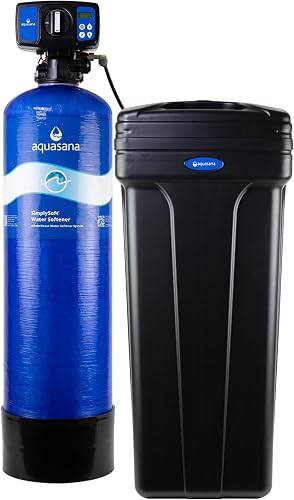
Aquasana SimplySoft 40K Softener
Best for certified softening - 6
 Check it
Kenmore 420 40,000 Grain Softener
Best for clear-water iron - 7
 Check it
Kenmore 350 32,000 Grain Softener
Best for tight utility rooms - 8
 Check it
iSpring WCS45KG 45,000 Grain One-Tank Softener
Best for limited floor space
How we chose these whole-house water softeners
We compared capacity, control type, stated household fit, filtration features and installation details. The scores reflect how well each system's features match common whole-house buying needs.
A grain rating describes treatment capacity, but the right size depends on both hardness and use. A smaller home with very hard water can have different needs from a larger home with softer water, so use a water test and household demand together.
| Product | Best for | Capacity | Control | Pre-filter | Our score |
|---|---|---|---|---|---|
| Aquasure Harmony 48,000 Grain Softener | busy family homes | 48,000 grains | Programmable digital metered head | Sediment, carbon and zinc | 9.0 |
| Aquasure Harmony 32,000 Grain Softener | smaller households | 32,000 grains | Programmable digital metered head | 8.6 | |
| AFWFilters Fleck 5600SXT 48K Softener | DIY installers | Digital metered Fleck 5600SXT | 8.5 | ||
| Aquasure Harmony 50,000 Grain Softener | higher capacity | 50,000 grains | Programmable digital metered valve | 8.4 | |
| Aquasana SimplySoft 40K Softener | certified softening | 40,000 grains | 8.2 | ||
| Kenmore 420 40,000 Grain Softener | clear-water iron | 40,000 grains | IntelliSoft technology | 8.1 | |
| Kenmore 350 32,000 Grain Softener | tight utility rooms | 32,000 grains | 8.0 | ||
| iSpring WCS45KG 45,000 Grain One-Tank Softener | limited floor space | 45,000 grains | 7.9 |
Best water softener system picks for different homes
These picks serve different needs, from a smaller household to a larger home or an installation where floor space is limited. Compare each system with your test results, plumbing layout and preference for routine operation before choosing.
Aquasure Harmony 48,000 Grain Softener: Best for busy family homes
- 48,000-grain capacity
- Programmable digital metered control head
- Sediment, carbon and zinc pre-filter
A high-capacity pick with a programmable metered control head and a sediment, carbon and zinc pre-filter. Aquasure describes it for homes with 3–4 bathrooms.
Pros
- Metered control head is programmable
- Pre-filter is included
- Aquasure states a 3–4 bathroom fit
Cons
- Check household demand against capacity
- Pre-filter performance claims come from Aquasure
The Aquasure Harmony 48,000 is the strongest all-around match here for households within its stated 3–4 bathroom range. Its programmable digital metered control lets you set auto-flush intervals based on incoming water quality and household use.
A sediment, carbon and zinc pre-filter is included. Aquasure says it removes a range of contaminants, including chlorine, VOCs, pesticides, odors and sediment, so check whether those filter targets match your water concerns.
The resin tank and brine tank need a suitable place near plumbing and a drain. At 62 in tall, the system also needs enough overhead clearance and open access for adding salt and routine care.
Choose this model when you want substantial capacity, adjustable metered controls and a pre-filter in one setup. Skip it if your home has low demand and a smaller-capacity system better matches your water test, or if you need filtration for substances the included filter is not designed to address.
Aquasure Harmony 32,000 Grain Softener: Best for smaller households
- 32,000-grain capacity
- Programmable digital metered control head
- Prefilled resin
This smaller Harmony model has a programmable metered control head and a stated fit for 1–2 bathrooms. Its prefilled resin and separate brine tank are part of the system.
Pros
- Smaller capacity for a more modest household
- Programmable metered controls
- Prefilled resin
Cons
- May be undersized for higher demand
- No pre-filter is specified for this model
The 32,000-grain Harmony fits Aquasure's stated range of 1–2 bathrooms. It has a programmable metered control head, prefilled resin, a resin tank and a separate brine tank.
Its 52 in height may make it easier to fit than the larger Harmony, but plan for salt storage and enough room to service both tanks. The control lets you adjust auto-flush intervals for water quality and use.
This model does not include the triple-purpose pre-filter found with the 48,000-grain pick. If your water needs sediment or contaminant treatment, plan for a separate filter that matches your test results.
Choose it for a smaller home with confirmed hardness and modest demand. Skip it if several fixtures often run at once or if your hardness and daily use point to more capacity; check the grain sizing guide before deciding.
AFWFilters Fleck 5600SXT 48K Softener: Best for DIY installers
- 48,000-grain system name
- Fleck 5600SXT digital metered control head
- Double backwash
The Fleck 5600SXT control measures water use and regenerates as needed. Its digital settings can be adjusted to prioritize capacity or salt use.
Pros
- Metered, on-demand control
- Adjustable digital settings
- Double backwash
Cons
- Confirm installation needs before choosing
- System details are less extensive than other picks
The AFWFilters Fleck 5600SXT suits buyers who want on-demand metered control and adjustable digital settings. Its control measures water use and regenerates as needed, with settings that can prioritize capacity or lower salt use.
The system name identifies it as a 48,000-grain softener. It comes with a brine tank, bypass and 1 in adapters, and AFWFilters describes a double-backwash design.
This pick is a reasonable option if you are comfortable reviewing installation instructions and checking fittings before work begins. Plumbing layouts vary, so compare the connections and available space with your planned location; use a qualified installer if the work is beyond your skills.
Choose it when adjustable metered control and a self-install option are central to your decision. Skip it if you need a more fully specified kit or want a system whose household fit is stated more clearly.
Aquasure Harmony 50,000 Grain Softener: Best for higher capacity
- 50,000-grain capacity
- Programmable digital metered control
- Sediment, GAC and zinc pre-filter
This Harmony system pairs a 50,000-grain capacity with a programmable metered valve and a sediment, GAC and zinc pre-filter. Aquasure describes it for 3–4 bathrooms.
Pros
- Highest stated capacity among these picks
- Includes a pre-filter
- Programmable metered control
Cons
- Check the included components for your installation
- Pre-filter performance claims come from Aquasure
The Aquasure Harmony 50,000 offers the highest stated capacity among these picks, and Aquasure describes it for 3–4 bathrooms. Its programmable digital metered valve can be set around water quality and household use.
It includes a sediment, GAC and zinc pre-filter. Aquasure says the filter removes contaminants that include chlorine, PFAs, odors and sediment, but you should compare those targets with a water test before counting on it for a particular concern.
The system includes a resin tank. The listed included components do not specify a brine tank, so confirm the exact configuration and required connections before planning the installation.
Choose this model if you want the highest stated capacity in this roundup and an included pre-filter. Skip it if you cannot confirm that the full installation kit suits your setup or if your household's tested demand does not call for that much capacity.
Aquasana SimplySoft 40K Softener: Best for certified softening
- 40,000-grain system
- IAPMO certified to NSF/ANSI 44 for hardness reduction
- Metered operation mode
Aquasana's SimplySoft is certified to NSF/ANSI 44 for the reduction of water hardness. Its metered mode is designed to use less salt and water than standard time-based regeneration, according to Aquasana.
Pros
- Hardness-reduction certification stated
- 15.5 GPM maximum flow rate
- Metered operation mode
Cons
- Pre-filter installation kit is separate
- Efficiency comparisons are Aquasana claims
Aquasana SimplySoft is IAPMO certified to NSF/ANSI Standard 44 for hardness reduction. It has a 40,000-grain rating and a stated maximum flow rate of 15.5 GPM.
The LCD control offers metered operation. Aquasana says this mode uses 50% less salt and 28% less water than standard time-based regeneration in its comparison, so treat those figures as a brand comparison rather than a promise for every household.
The base tank and cabinet system is designed for homes with up to 5 people and 4 bathrooms. Aquasana recommends an optional pre-filter in its installation kit, sold separately.
Choose SimplySoft if certification and a higher stated flow rate are priorities. Skip it if you need a pre-filter included in the same system or if the separate kit does not fit your installation plan.
Kenmore 420 40,000 Grain Softener: Best for clear-water iron
- 40,000-grain capacity
- IntelliSoft adaptive regeneration
- Maker-stated clear-water iron reduction
Kenmore describes the 420 for households of 1–5 people and says it reduces clear-water iron. Check your water test and the brand's stated limits before relying on it for iron.
Pros
- Adaptive regeneration
- Sediment pre-filter is described
- Clear-water iron reduction is a stated use
Cons
- Flow rate is lower than some picks here
- Iron suitability depends on water conditions
The Kenmore 420 is worth comparing when a water test shows clear-water iron as well as hardness. Kenmore describes this 40,000-grain model for households of 1–5 people and says it reduces clear-water iron.
Its IntelliSoft technology is designed to learn household water use and regenerate when needed. The system also has a sediment pre-filter and a stated maximum flow rate of 7.7 GPM.
Iron performance depends on water conditions, so test before buying and compare your result with Kenmore's stated limits. A softener is not a general-purpose well-water filter, and other concerns may need separate treatment.
Choose the 420 if its household fit and stated iron-reduction purpose match your results. Skip it if you need treatment for iron outside its limits or a higher flow rate; our well-water softener guide covers other options.
Kenmore 350 32,000 Grain Softener: Best for tight utility rooms
- 32,000-grain system
- IntelliSoft adaptive regeneration
- Compact footprint
The Kenmore 350 combines a 32,000-grain capacity with adaptive regeneration and a compact footprint. Kenmore describes it for households of 1–4 people.
Pros
- Compact installation footprint
- Adaptive regeneration
- Display monitors flow and salt levels
Cons
- Lower capacity than the larger picks
- Check flow needs for simultaneous use
The Kenmore 350 combines a 32,000-grain capacity with a compact footprint and IntelliSoft regeneration. Kenmore describes it for households of 1–4 people, making it a practical system to compare for homes with moderate use and limited installation space.
Its display monitors flow rate and salt levels, and it has a high-flow 3/4 in valve. Kenmore also describes hardness and clear-water iron reduction, but test iron and check the brand's limits before relying on that feature.
The stated maximum flow rate is 7.2 GPM. Think about how often showers, laundry and other fixtures run together, since simultaneous demand can make flow more important than a capacity number alone.
Choose the 350 when a compact system and adaptive control suit your home. Skip it if your water use regularly demands more flow or capacity; compare it with the Kenmore 420 and larger-grain options.
iSpring WCS45KG 45,000 Grain One-Tank Softener: Best for limited floor space
- 45,000-grain capacity
- One-tank design
- Automatic backwash and regeneration
The WCS45KG combines a 45,000-grain capacity with a one-tank design that saves space. iSpring says to install an iron filter first when the water contains iron.
Pros
- No separate tanks
- Automatic backwash and regeneration
- Setup can be adjusted to water conditions and use
Cons
- No built-in sediment filter
- Iron needs a separate filter for optimal performance
The iSpring WCS45KG combines a 45,000-grain capacity with a one-tank design, so it does not need separate tanks. Automatic backwash and media regeneration are designed to reduce the need for manual cleaning.
Setup can be adjusted for water conditions and use, and iSpring says the controls can adjust the hardness of treated water. The system has a 1 in NPT inlet and outlet, so compare those connections with your plumbing plan.
This model has no built-in sediment filter. iSpring recommends a sediment pre-filter when sediment is significant and an iron filter before the softener when water contains iron.
Choose it if floor space is limited and your water conditions fit the system. Skip it if you need a built-in sediment filter or want a softener to handle iron without a separate filter; the softener and filter combo guide can help you compare treatment layouts.
How should you size a water softener system?
Choose capacity by combining tested hardness with daily household demand. Bathroom count offers a quick comparison point, but it cannot replace a water test or an estimate of how much water people in the home use.
Start by testing hardness at the point where water enters the home, then note the number of people and the home's typical water use. If hardness is high or the household uses more water, capacity may be used up faster between regeneration cycles.
Compare the 32,000-, 40,000-, 45,000-, 48,000- and 50,000-grain options only after you have those details. The home water hardness test kit guide covers test options, while the how to test water hardness at home guide explains the process.
Avoid buying the largest capacity by default. An oversized system can be a poor fit for your space and household needs, while an undersized one may regenerate more often than expected.
Should you choose a softener with a pre-filter?
Choose a pre-filter when your water test or visible sediment points to a problem that the filter is designed to address. A pre-filter can reduce certain substances, but it does not turn a softener into a complete water treatment system.
The two Aquasure Harmony models with pre-filters include sediment and carbon or GAC and zinc media. Aquasana recommends an optional pre-filter kit, while iSpring says its WCS45KG has no built-in sediment filter.
Check what a filter is intended to reduce and whether you need a separate stage for iron or other concerns. For well water, test first and compare specific limits; our guides to whole-house filters for well water and softeners for iron explain the distinction.
Is metered regeneration useful for a home?
Metered regeneration is useful when you want regeneration to respond to water use rather than run only on a fixed schedule. The models here vary in how much control they give you, from programmable settings to systems designed to adapt to household patterns.
A metered control still needs correct setup. Follow the system instructions for water hardness and household use, and review the settings after changes in occupancy or water demand.
Before installation, confirm access to power if the model requires it, a suitable drain route, shutoff access and enough room for salt or service. A bypass valve can help isolate a softener during maintenance; read what a water softener bypass valve does before planning the plumbing.
What setup and care mistakes should you avoid?
The most common setup mistake is choosing a capacity or control setting before measuring hardness and estimating household use. Incorrect inputs can lead to a system that regenerates too often or does not match the home's demand.
Measure the installation area, including height clearance and room to reach the brine tank or cabinet. Confirm inlet and outlet sizes, drain access, power needs and included components before work begins, then use the installation instructions or a qualified plumber.
Keep salt accessible and check its level as part of routine care. Avoid letting a salt bridge go unnoticed, since it can prevent salt from reaching the water; follow a water softener maintenance checklist and learn how to clean a water softener.
Do not use a softener as the only response to every water issue. Sediment, iron and drinking-water contaminants may call for separate treatment, and a well-water test is especially useful before selecting a system.
Which whole-house softener should you choose?
Choose the Aquasure Harmony 48,000 if you want a strong all-around match for a 3–4 bathroom home with metered controls and an included pre-filter. Pick the Aquasure 32,000 or Kenmore 350 for a smaller household, Aquasana for certified hardness reduction, or iSpring when a one-tank layout is the priority.
Choose the Kenmore 420 only when your test results and its stated clear-water iron use match your water. For adjustable on-demand controls, compare the AFWFilters Fleck 5600SXT; for the highest stated capacity here, compare the Aquasure Harmony 50,000 and verify its included components.
The best water softener system is the one sized to your tested hardness and household use, with a setup that fits your plumbing and maintenance routine. If you are still comparing brands, read our water softener brands guide and home system selection guide.
Our top 3 picks at a glance
-
1
-
2
Best for smaller households
Aquasure Harmony 32,000 Grain Softener
8.6/10 our score
See it on Amazon -
3
Frequently asked questions
How do I choose the right grain capacity?
Choose capacity based on your water hardness and household use, not bathroom count alone. A water test gives you the hardness level, and the number of people using water helps estimate daily demand.
Use our water softener grain size guide to work through the sizing.
Does a water softener also filter drinking water?
A standard ion-exchange softener reduces hardness minerals such as calcium and magnesium. It does not replace a drinking-water filter for contaminants you want to target.
Some picks here include a pre-filter, but check what it is designed to reduce and consider a separate filter when needed.
Can these softeners handle well water with iron?
Some brands describe iron reduction, but suitability depends on the iron level and type in your water. Test the water first, then compare the result with the model's stated limits.
See our guide to water softeners for well water and water softeners for iron before choosing.
What does a metered control do?
A metered control tracks water use and can trigger regeneration based on demand. That differs from a timer that regenerates on a set schedule.
The control setup and adjustment options vary by model, so compare those details with how much water your household uses.


